The Hidden Worldview Inside Tech's Favorite Adjectives
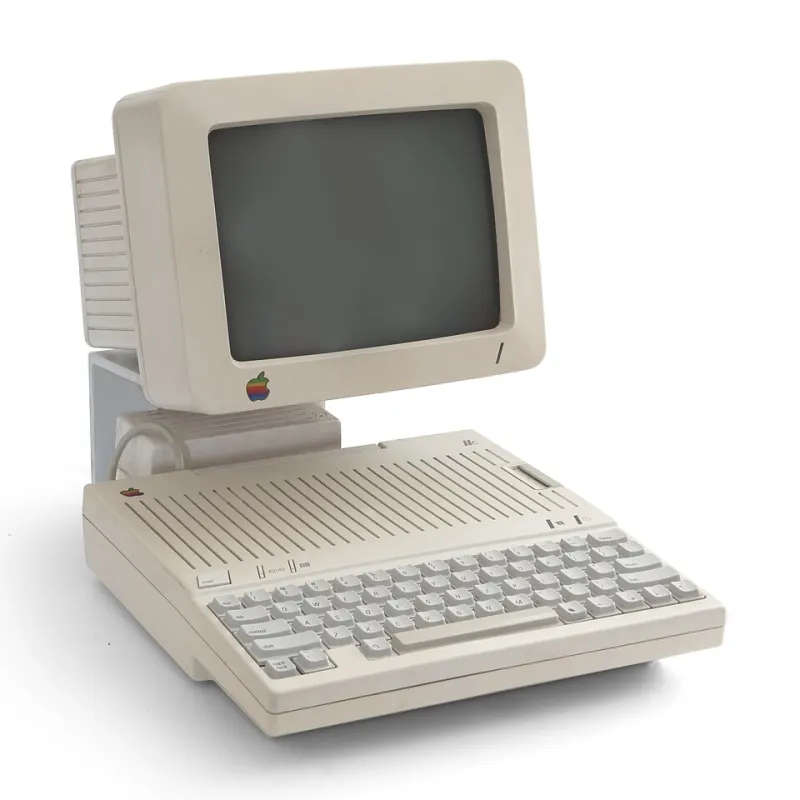
Photo: Bilby, CC BY 3.0, via Wikimedia Commons
Open any Apple product page, scroll through a UX designer's LinkedIn profile, or skim a Silicon Valley startup's job posting, and you'll notice something interesting. The same adjectives keep appearing. Intuitive. Frictionless. Elegant. Delightful. Seamless. They feel polished, almost poetic — and for non-native English speakers, they can also feel frustratingly vague.
But here's the thing: these words aren't vague at all. They're actually very precise. They just carry a layer of cultural meaning that goes beyond what you'd find in a standard dictionary. Once you understand what these adjectives are really saying — and why American tech companies reach for them again and again — you'll have a much clearer window into how the industry thinks about its users, its responsibilities, and its own identity.
Let's break them down one by one.
'Intuitive' — The Word That Puts Responsibility on the Product
You'll see intuitive everywhere in tech writing. Apple describes its interfaces as intuitive. Job postings ask for engineers who can build intuitive experiences. Reviewers praise apps for being intuitive to navigate.
In everyday English, intuitive means something you understand naturally, without being taught. But in tech culture, it carries a specific philosophical weight. When a company calls its product intuitive, it's making a promise: you won't need a manual. You won't need to struggle. The design will meet you where you are.
This reflects a core American tech value — the belief that good design should feel invisible. If a user has to think too hard, that's not the user's fault. That's a design failure. Calling something intuitive is essentially saying, we did the hard work so you don't have to.
For English learners, it's worth noting that intuitive is almost always used as praise in tech contexts. If someone says a product is "not very intuitive," that's a polite but serious criticism.
'Friction' and 'Frictionless' — Borrowed From Physics, Loaded With Meaning
These two are fascinating because they're borrowed directly from the world of physics — and the metaphor is doing a lot of work.
In physics, friction is the resistance that slows things down. In tech, friction refers to anything that makes an experience harder, slower, or more frustrating than it needs to be. A checkout process that requires too many steps? Friction. A sign-up form that asks for your phone number before you've seen the product? Friction. A button that's hard to find? Friction.
Frictionless, then, is the goal. A frictionless experience is one where everything flows — no unnecessary steps, no confusion, no hesitation. Apple Pay is often described as frictionless because you can complete a purchase with a glance or a touch. No wallet, no card, no delay.
Here's what's culturally interesting about this word pair: they assume that speed and ease are inherently good. That removing obstacles is always progress. This is a very American, very Silicon Valley perspective — and it's worth knowing that not everyone in the tech world agrees with it. Some critics argue that friction can actually be useful, that slowing users down occasionally prevents mistakes or encourages more thoughtful choices. But in mainstream American tech writing, frictionless is almost always a compliment.
'Elegant' — When Tech Borrows From Art
In mathematics and science, elegant describes a solution that achieves something complex through surprisingly simple means. Tech culture adopted this usage and ran with it.
When an Apple engineer calls a piece of code elegant, they don't just mean it works. They mean it works beautifully — with minimal steps, no unnecessary complexity, and a kind of logical clarity that almost feels aesthetic. When a product reviewer calls the MacBook's hinge mechanism elegant, they're saying it solves an engineering problem in a way that feels almost artistic.
For non-native speakers, elegant in tech is a high compliment — arguably higher than just calling something "good" or "well-designed." It suggests a level of refinement and intentionality that goes beyond function. It implies the creator cared about more than just making something work. They cared about how it works.
This word also quietly signals something about Apple's brand identity specifically. Apple has always positioned itself at the intersection of technology and the liberal arts — a company that thinks like an artist as much as an engineer. When Apple fans and critics reach for elegant to describe Apple products, they're participating in that identity.
'Delightful' — The Word That Treats Users Like Guests
This one surprises a lot of English learners because delight sounds almost old-fashioned. You might associate it with fairy tales or formal dinner parties. So why does it appear constantly in UX (user experience) writing?
In tech culture, delightful describes a product moment that goes beyond expectation — something that makes a user smile, feel surprised in a good way, or feel genuinely cared for. It might be a small animation that plays when you complete a task. It might be a clever error message that's funny instead of frustrating. It might be the satisfying click of a well-made keyboard.
Using delightful signals that a company thinks of its users not just as people with problems to solve, but as people with emotions worth considering. It's a hospitality word applied to technology — and that says something meaningful about the values behind it.
'Seamless' — The One That Does the Most Heavy Lifting
If there's one adjective that captures the entire philosophy of modern American tech design, it might be seamless. Literally, a seam is the visible line where two pieces of fabric are stitched together. Seamless means the join is invisible — the whole thing feels like one continuous thing.
In tech, seamless describes how different products, services, or steps in a process connect without any visible or felt transition. The way an iPhone hands off a FaceTime call to a Mac. The way iCloud keeps your photos in sync without you doing anything. The way Apple Watch unlocks your MacBook when you sit down.
When tech companies call their ecosystem seamless, they're describing an aspiration: that the technology should disappear into the background of your life. That the user should never feel the machinery behind the magic.
This word also carries a quiet assumption worth noticing — that the user's time and attention are precious, and that any moment spent navigating the technology itself (rather than using it to do something meaningful) is a moment wasted.
What These Words Tell You About American Tech Culture
Taken together, these adjectives paint a portrait of a particular set of values. American tech culture — especially the Apple-influenced corner of it — tends to believe that:
- Complexity should be hidden, not celebrated.
- Users should be respected, not lectured to or burdened.
- Good design is a form of care, not just competence.
- Speed and ease are virtues, almost moral ones.
For non-native English speakers, learning these words isn't just vocabulary practice. It's cultural fluency. When you hear a product manager say they want the onboarding to feel intuitive and delightful with zero friction, you're now hearing a complete design philosophy compressed into a single sentence.
And when you're the one writing product copy, drafting a job application, or pitching a feature idea to an American tech team, reaching for these words — correctly and confidently — signals that you understand not just the language, but the thinking behind it.
That's the kind of fluency that opens doors.