Why 'Seamless' Is the Most Powerful Word in American Tech Culture
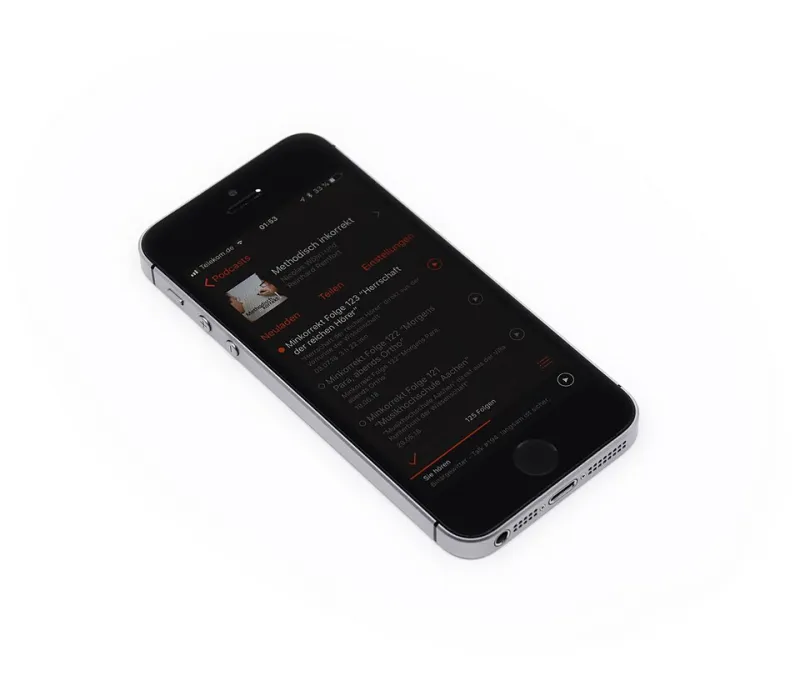
Photo: SimonWaldherr, CC BY-SA 4.0, via Wikimedia Commons
If you've spent any time around American tech conversations — whether in a meeting room, on a podcast, or just scrolling through Apple's website — you've probably heard the word seamless more times than you can count. "A seamless experience." "Seamless integration." "It just works seamlessly."
But here's the thing: most English learners understand the dictionary definition just fine. No seams. Smooth. Uninterrupted. What's harder to grasp is why Americans care about this idea so deeply — and how that obsession connects to a much bigger concept that shapes everything from product design to office culture.
That concept is the ecosystem.
A Word Borrowed from Biology
In science class, an ecosystem is a community of living things that interact with each other and their environment. A forest, a coral reef, a pond — these are ecosystems. Everything depends on everything else. Remove one piece, and the whole system feels it.
Somewhere along the way, the tech industry borrowed this word and ran with it. Today, when Americans talk about the "Apple ecosystem," they mean something surprisingly similar: a network of devices, apps, and services — iPhone, Mac, iPad, Apple Watch, iCloud, AirDrop, Handoff — that are designed to interact with each other so smoothly that switching between them feels almost invisible.
That invisibility? That's the seamless part.
Apple didn't invent the ecosystem metaphor, but they've arguably done more than any other company to make it feel real to everyday consumers. When you start writing an email on your iPhone and finish it on your MacBook without doing anything special, that's the ecosystem at work. When your AirPods automatically switch from your iPad to your iPhone the moment you take a call, that's the ecosystem. The experience is designed so that the technology disappears and you just... live your life.
Why This Word Is Everywhere in American Business English
Here's where it gets really useful for English learners: the ecosystem metaphor has escaped the tech world entirely. You'll now hear Americans use it in business meetings, startup pitches, marketing decks, and even casual conversations about industries that have nothing to do with software.
"We're building an ecosystem around our brand." "Their ecosystem of partners makes them hard to compete with." "Once you're inside their ecosystem, it's really hard to leave."
That last sentence points to something important. In American business culture, ecosystems aren't just about convenience — they're also about stickiness. When a company builds a tight ecosystem, customers find it harder to switch to a competitor. Tech insiders sometimes call this a "moat" (another borrowed metaphor — as in a castle moat that keeps enemies out). Apple's ecosystem is considered one of the strongest moats in all of business.
Understanding this helps you decode a lot of American business conversation. When someone says a company has a "strong ecosystem," they're usually complimenting both the product design and the business strategy behind it.
'Seamless' and the American Ideal of Friction-Free Living
To really get why seamless resonates so deeply in American culture, it helps to understand a broader cultural value: Americans, especially in tech culture, have a deep discomfort with friction.
Friction, in this context, means anything that slows you down, creates extra steps, or forces you to think about the tool instead of the task. Friction is the enemy of productivity. It's the loading screen, the password you forgot, the app that doesn't sync with the other app.
Seamless is the opposite of all that. It's the promise that technology will get out of your way.
This is why Apple's marketing language leans so hard on words like effortless, intuitive, natural, and yes, seamless. These aren't just product descriptions. They're signals to American consumers that this technology respects their time and attention.
For non-native speakers, recognizing this cultural subtext is huge. When an American colleague says "we need this to feel more seamless," they're not just asking for a technical fix. They're expressing a value — a belief that good design should be invisible, and that users shouldn't have to work to understand a product.
How Ecosystem Thinking Shows Up at Work
This mindset bleeds into workplace culture in ways that can be genuinely confusing if you're not expecting it.
American tech teams often talk about "integration" the same way Apple talks about its products. Does this tool integrate with our existing workflow? Does this new hire integrate well with the team? Can we build something that integrates all our data sources?
The word integrate carries the same DNA as ecosystem and seamless — it's about pieces fitting together without visible effort. When Americans praise a coworker by saying they "fit right in" or "really integrated into the team quickly," they're applying ecosystem thinking to human relationships.
Similarly, phrases like "end-to-end solution," "all-in-one platform," and "unified experience" all come from the same philosophical place. They reflect a preference for wholeness over patchwork — for systems that feel designed rather than assembled.
A Quick Vocabulary Snapshot
Here are a few ecosystem-related terms worth adding to your tech English toolkit:
- Ecosystem — a network of products, services, or partners that work together
- Seamless — smooth and uninterrupted, with no visible effort required
- Friction — unnecessary obstacles or extra steps in a user experience
- Integration — the process of connecting different tools or systems so they work as one
- Stickiness — how well a product or platform keeps users from leaving
- Lock-in — when a customer becomes so dependent on one ecosystem that switching is costly or difficult
- Moat — a competitive advantage that protects a business from rivals (borrowed from castle architecture)
The Bigger Lesson
Learning the word seamless is easy. Understanding why it matters — why it sits at the center of Apple's brand identity and American tech culture — takes a little more work. But once you see it, you start noticing it everywhere.
The next time an American colleague asks for something to be more "seamless," or a product manager talks about "building an ecosystem," you'll know they're not just describing a feature. They're expressing a worldview: that the best technology is the kind you stop noticing, and that the most powerful products are the ones that connect everything together so well, you'd never want to leave.
And honestly? That's a pretty compelling idea — whether you're designing software or just trying to communicate more naturally in English.