Words That Sell Dreams: Understanding the Emotional Vocabulary of Apple and Big Tech Marketing
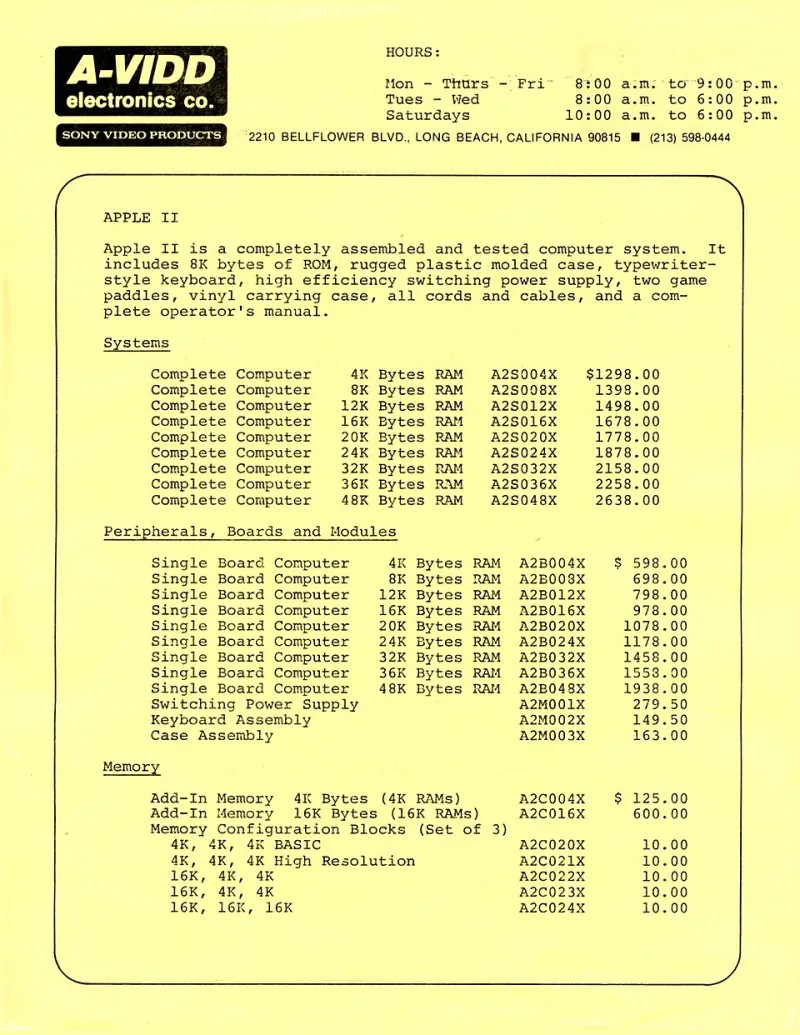
Photo: A-Vidd Electronics of Long Beach, California., Public domain, via Wikimedia Commons
Somewhere between the dramatic pause and the slow product reveal, Apple's marketing team drops a word that's supposed to make your heart rate tick up just a little. "Revolutionary." "Magical." "The most powerful chip we've ever made." These aren't random word choices. They're engineered—carefully selected to make you feel something before you've even thought about whether you actually need a new laptop.
For non-native English speakers, this kind of language can be genuinely disorienting. Not because the words are hard—most of them are pretty common. But because the emotional charge those words carry in American marketing culture is almost invisible unless you've been swimming in it for years. This piece is about learning to see the current.
The Vocabulary of Aspiration
Let's start with the heavy hitters. There's a small cluster of words that Apple (and most of Silicon Valley) reaches for again and again:
Revolutionary — Technically, this means a complete and dramatic change, like a political revolution. In tech marketing, it's used to describe almost any product update that's more than incremental. The word is doing emotional work: it frames the company as a force of history, not just a hardware manufacturer.
Magical — This one is pure feeling. Magic means something that defies rational explanation. When Apple calls a feature "magical," they're not claiming it involves wizardry. They're saying: you don't need to understand how it works—just experience it. The word is designed to bypass your skeptical brain and go straight to the part that wants to be amazed.
Seamless — Literally, a seam is the line where two pieces of fabric are stitched together. "Seamless" means no visible stitching—no rough edges, no friction. In tech, it describes an experience so smooth that the technology disappears. This word is aspirational because it promises ease in a world where most software interactions are anything but.
Intuitive — If something is intuitive, you understand it without being taught. Apple loves this word because it flatters the user. It implies: you're naturally smart enough to figure this out. That's a subtle but powerful compliment baked right into a product description.
Why These Words Hit Differently in America
Here's something worth knowing about American marketing culture: there's a long tradition of big talk. American advertising has always leaned into hyperbole—the biggest, the best, the most powerful ever made. This goes back decades, long before Silicon Valley existed. Words like "revolutionary" don't raise eyebrows in the US the way they might in, say, German or Japanese advertising culture, where understatement and precision are more common values.
For English learners from cultures where modesty is the default register, American tech marketing can feel almost aggressive in its confidence. Phrases like "we're going to change everything" or "nothing will ever be the same" are treated as normal enthusiasm here. In other markets, the same phrases might read as arrogant or dishonest.
This isn't a judgment either way—it's just useful context. When you hear a tech company say their product is "unlike anything you've ever experienced," your job as a language learner is to recognize that as a cultural formula, not a factual claim. The English is sincere in tone even when the content is exaggerated.
The Persuasion Techniques Behind the Words
Once you start noticing the vocabulary, you can also start spotting the techniques. Here are three that show up constantly in Apple's marketing copy:
Vague superlatives. Phrases like "the best camera system we've ever put in an iPhone" or "our most advanced display" sound specific but are actually very hard to argue with. Best by what measure? Most advanced compared to what? These statements create an impression of precision without actually committing to verifiable facts. They're designed to sound authoritative while staying legally safe.
Second-person intimacy. Notice how Apple ads often speak directly to you. "Now you can do things you never thought possible." "Your photos have never looked like this." This isn't accidental. Using "you" creates a personal connection—it makes a mass-market product feel like it was designed specifically for one individual. In English, this second-person address is a common warmth signal in advertising.
Emotional sequencing. Apple's product videos often move through a specific emotional arc: show a relatable human moment (someone missing a friend, a parent watching a child grow up), then introduce the product as the thing that captures or enhances that moment. The product doesn't solve a technical problem—it amplifies a human feeling. This structure makes the vocabulary around the product feel warmer and more personal than a spec sheet ever could.
When "Seamless" Isn't Seamless
Here's the honest part. Learning to recognize persuasion language doesn't mean the products aren't good—many of them genuinely are. But it does mean you can engage with marketing copy more critically, which is a valuable skill in English and in life.
When you read that something is "seamless," ask: seamless for whom? Under what conditions? When an ad calls a feature "revolutionary," consider: revolutionary compared to last year's model, or compared to the industry as a whole?
This kind of critical reading is sometimes called media literacy—the ability to understand not just what a text says, but why it's saying it and what it wants you to feel. American culture values this skill, even as American advertising works hard to short-circuit it.
Building Your Own Emotional Vocabulary Map
One practical exercise: next time you read a tech ad—from Apple, Google, Samsung, whoever—underline every adjective and ask yourself two questions:
- What does this word literally mean?
- What is it trying to make me feel?
You'll quickly find that the gap between those two answers is where the real persuasion lives. "Magical" literally means relating to magic. Emotionally, it's trying to make you feel wonder and excitement. "Revolutionary" literally means involving radical change. Emotionally, it's trying to make you feel like you're part of something historic.
Once you can see that gap clearly, you're not just learning English vocabulary—you're learning how English works in American commercial culture. And that's the kind of fluency that goes well beyond any dictionary definition.