Sorry, Not Sorry: The Careful Language Tech Companies Use When Things Go Wrong
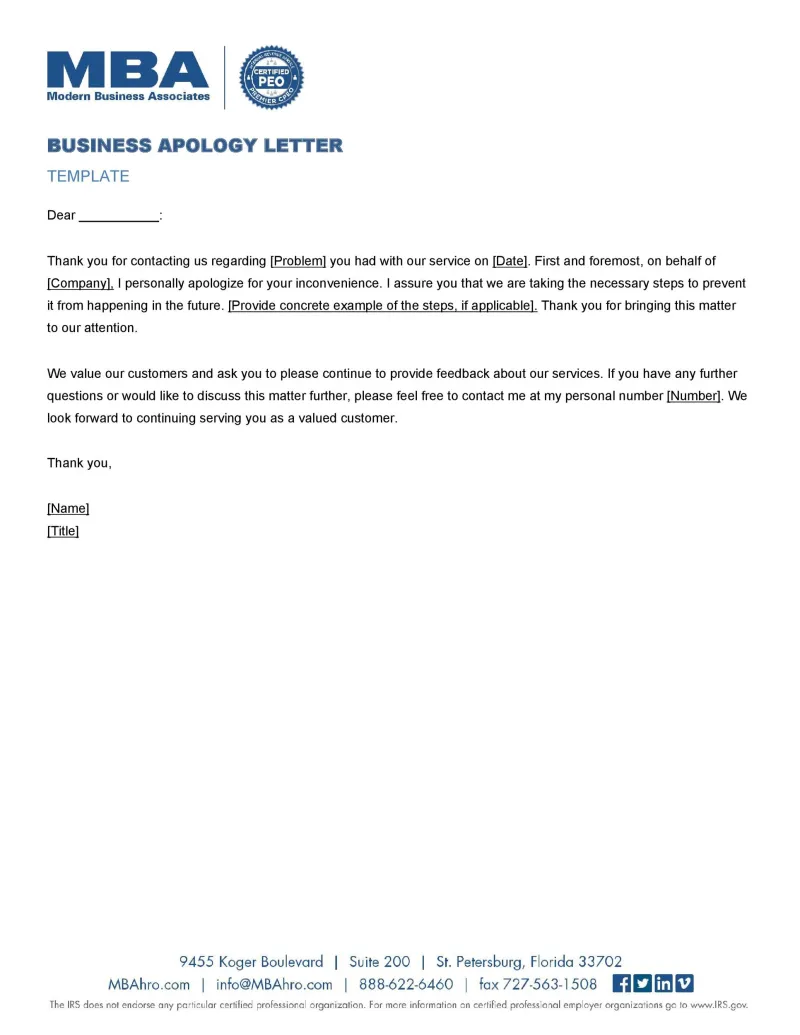
Photo: person writing apology letter on laptop corporate office serious expression, via templatelab.com
In 2019, after years of complaints, Apple officially acknowledged that the butterfly keyboard — the ultra-thin mechanism used in MacBooks from 2015 to 2019 — was problematic enough to warrant a free repair program. Here's the kind of language that surrounded that acknowledgment:
"Apple has determined that a small percentage of the keyboards in certain MacBook, MacBook Air, and MacBook Pro models may exhibit one or more of the following behaviors..."
Notice anything? The word "sorry" doesn't appear. Neither does "mistake," "failure," or "defect." Apple "determined" — a neutral, scientific-sounding word. The keyboards "may exhibit" behaviors — not "have broken" or "are failing." And the problem affects "a small percentage" — a qualifier that immediately shrinks the scope.
This is not accidental writing. This is a highly deliberate form of English that tech companies have refined into something close to an art form. Understanding it will make you a sharper reader, a more careful writer, and a more effective communicator when you're the one who has to deliver difficult news.
The Anatomy of a Non-Apology
Tech crisis communications typically follow a recognizable structure. Let's break it down piece by piece.
Step 1: Acknowledge without admitting. The company confirms that something happened, but avoids framing it as a failure of their own making. Compare:
- Direct: "Our keyboard design was flawed and caused problems for customers."
- Corporate: "We are aware that some customers have experienced issues with their keyboards."
The second version puts the experience on the customer side ("customers have experienced") rather than the company side ("we caused"). Grammatically, the company disappears from the sentence as the responsible party.
Step 2: Use passive voice strategically. Passive voice is one of the most powerful tools in the non-apology toolkit. In active voice, there's always a subject doing something: Apple broke the keyboards. In passive voice, the action happens without a clear agent: The keyboards were affected by an issue.
Passive constructions aren't inherently bad — English uses them all the time for perfectly good reasons. But in crisis communications, they're frequently used to remove accountability from the sentence structure entirely. When you see passive voice in a tech statement, ask yourself: who is the missing subject, and why are they missing?
Step 3: Quantify downward. Phrases like "a small number of users," "a limited subset of devices," or "certain configurations" all serve to minimize the perceived scale of the problem. Even when millions of devices are affected, companies reach for language that makes the issue sound like an edge case.
Step 4: Express empathy without ownership. "We understand this can be frustrating." This is the corporate empathy formula, and you'll find it in virtually every tech apology. It validates the feeling without accepting responsibility for causing it. "Can be" is particularly slippery — it's conditional, suggesting that frustration is one possible reaction among many, rather than a reasonable response to a real problem.
Step 5: Pivot to the solution. The fastest way to stop talking about what went wrong is to start talking about what's being done. Announcing a repair program, a software update, or a new initiative shifts the conversation forward and positions the company as proactive rather than reactive.
Reading Between the Lines: A Real-World Example
When Facebook (now Meta) faced congressional scrutiny over data privacy in 2018, Mark Zuckerberg's prepared statement included language like: "We didn't take a broad enough view of our responsibility, and that was a big mistake."
This is actually a more direct acknowledgment than most tech statements — the word "mistake" appears, and there's a first-person subject ("we"). But notice what the mistake is defined as: not taking a "broad enough view." The failure is framed as one of perspective or scope, not of action. The company didn't do something wrong; it thought too narrowly. It's a more sophisticated version of the same strategy — shifting the locus of failure from behavior to mindset.
For English learners, this distinction is important. In English, how you frame a mistake matters enormously. "I made an error" is different from "an error occurred." "We mishandled this" is different from "this was mishandled." The words carry the same basic information, but they distribute responsibility very differently.
Why This Matters Outside the Tech World
You might be wondering: why does any of this matter to me if I'm not writing press releases for a tech giant?
Because these patterns show up everywhere. They appear in workplace emails when a project goes sideways. They appear in customer service interactions when a company makes a billing error. They appear in political statements, medical communications, and legal documents. The ability to recognize diplomatic deflection — and to choose whether to use it or reject it — is a core professional English skill.
There are also legitimate uses for careful, hedged language. If you're communicating about a problem before you fully understand it, qualifying your statements is honest, not deceptive. If you're delivering bad news in a workplace setting, softening the language can preserve relationships. The difference between skillful diplomacy and misleading communication often comes down to intent and degree.
Speaking Honestly When Things Go Wrong
If you want to communicate authentically about a mistake — in an email, a meeting, or a difficult conversation — here's what direct accountability actually sounds like:
- "I got this wrong, and here's what happened."
- "This was our error. We're fixing it, and we're taking steps to make sure it doesn't happen again."
- "I understand why you're frustrated. You have every reason to be."
None of these sentences are weak. In fact, direct accountability often builds more trust than careful deflection. Consumers and colleagues alike tend to respond better to honesty than to language that feels engineered.
Apple eventually extended its butterfly keyboard repair program multiple times and ultimately abandoned the design entirely — switching back to a scissor-switch mechanism in 2020. The product spoke louder than the press release ever did.
The Bottom Line
Tech companies have developed a sophisticated vocabulary for talking around failure without talking about it. Passive voice, downward quantification, conditional empathy, and strategic pivots are all tools in that vocabulary.
As an English learner, your job is to recognize these tools when you see them — and to make conscious choices about when to use them and when to put them down. The most powerful thing you can say when something goes wrong is often the simplest: "We got it wrong. Here's how we're making it right."
Seven words. No passive voice. No qualifiers. Just English doing what it does best when we let it.