One Word, All the Difference: How Apple's Product Tiers Use Language to Make Expensive Feel Inevitable
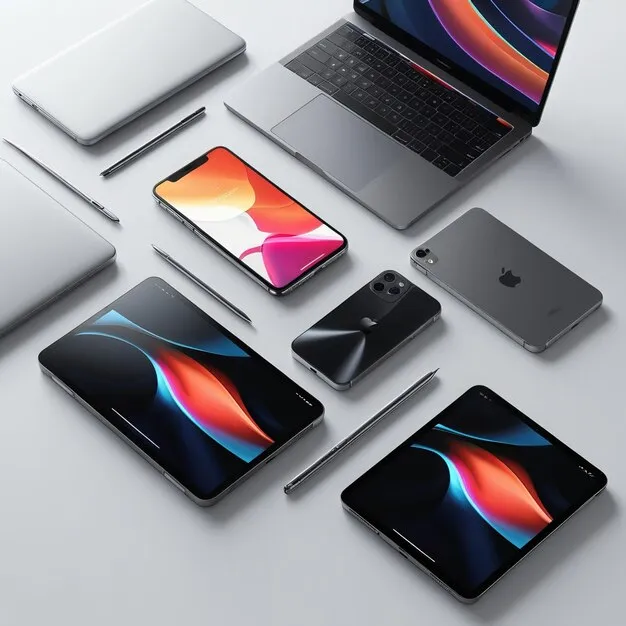
Photo: Apple product lineup iPhone MacBook Pro on table premium minimalist, via img.freepik.com
Here's a small experiment. Say these two product names out loud:
iPhone 16 Pro Max. Samsung Galaxy S24 Ultra Plus.
Both are flagship smartphones. Both cost roughly the same. But one of them sounds like a destination, and the other sounds like a form you're filling out. The difference isn't just branding — it's grammar.
Apple has quietly built one of the most sophisticated linguistic hierarchies in consumer technology. And once you understand how it works, you'll start seeing the same patterns everywhere — in job titles, in business pitches, in the way your boss introduces a new initiative. This is the grammar of exclusivity, and it's worth learning.
The Power of the Single-Syllable Modifier
Look at Apple's current Mac lineup: Mac, MacBook Air, MacBook Pro, Mac Pro, Mac Studio, Mac mini. Now look at the modifiers doing the heavy lifting: Air, Pro, mini, Studio. Every single one is one or two syllables. Short. Punchy. Easy to say, easy to remember.
This isn't an accident. In English, single-syllable words carry a particular kind of authority. Think about the words we use for the most important things: life, death, love, war, truth. Brevity implies certainty. When something is complicated or uncertain, we reach for longer words — approximately, potentially, comprehensive. When we want something to feel like a fact, we cut it down.
Apple's modifiers work the same way. Pro doesn't explain anything. It doesn't tell you what the product does differently or why it costs more. It just asserts a status, and your brain fills in the rest. You already know what a professional is. Apple just borrowed that identity and attached it to a laptop.
Compare that to a competitor's naming approach. Dell's XPS lineup has included names like XPS 15 9530 and XPS 15 Plus. Microsoft offers the Surface Pro 9 and Surface Laptop Studio 2. These names describe; Apple's names declare.
The Ladder You Didn't Notice You Were Climbing
Apple's tier structure — Standard (implied), Pro, Max, Ultra — functions as a four-rung ladder, and each rung is a single word. What's clever is that the base product often has no modifier at all. The plain iPhone 16 doesn't carry a label like "Standard" or "Lite" or "Essential." It's just... the iPhone. And that absence creates its own kind of pressure.
In linguistics, this is sometimes called a marked versus unmarked form. The unmarked form (just "iPhone") is the default, the neutral option. The marked forms (Pro, Max) signal deviation from that default — upward deviation. By not labeling the base model, Apple avoids the stigma of words like "basic" or "entry-level" while still making the premium options feel like upgrades rather than extras.
Google tried something similar with its Pixel lineup — Pixel, Pixel Pro, Pixel Pro XL — but then introduced the Pixel Fold and Pixel Tablet, which branch sideways rather than upward. The hierarchy gets fuzzy. Is a Fold above a Pro? Where does the Tablet fit? Apple's ladder has no such confusion. You always know where you stand.
What "Ultra" Is Really Saying
When Apple introduced the M1 Ultra chip in 2022, the name felt like a natural ceiling — and that was entirely by design. Ultra sits above Max in the hierarchy, and both words carry a meaning that goes beyond their dictionary definitions.
Max implies a limit reached. Ultra implies a limit surpassed. Together they create a narrative: the Pro is for professionals, the Max is the most a professional could need, and the Ultra is for people who need more than that. Apple never says this explicitly. The words say it for them.
This is called connotative loading — using a word's cultural associations rather than its literal meaning to communicate something. English learners often focus on denotation (what a word technically means) while underestimating connotation (what a word feels like). In professional settings, connotation is frequently more important.
Using Stratification Language in Your Own English
So how do you apply this in real life? The principle is simple: when you want something to feel authoritative or premium, go shorter and more declarative. When you want to hedge or leave room for interpretation, go longer.
Compare these two ways of describing yourself in a job interview:
- "I have extensive experience in a range of project management methodologies."
- "I run projects. Cross-functional, fast-moving, high-stakes ones."
The second version borrows Apple's playbook: short words, confident assertions, no qualifiers. It doesn't explain more — it claims more.
Or in written communication:
- "This solution offers comprehensive optimization across multiple operational parameters."
- "This works. Fast, clean, and at scale."
Neither sentence is always better — context matters. But understanding the difference gives you a genuine choice. Apple's product naming teaches us that sometimes the most powerful thing you can say is the shortest thing you can say.
The Takeaway
Apple's tier language isn't just marketing — it's a masterclass in how English can create hierarchy without explanation, and value without justification. Pro, Max, Ultra: three words, zero definitions, complete clarity.
For English learners, the lesson is this: vocabulary isn't just about knowing more words. It's about understanding which words carry weight, and why. Next time you reach for a long, descriptive phrase, ask yourself — is there a shorter word that already does the job? Chances are, there is. Apple found it first.