Stop Hiding Behind the 😊: What Emoji Are Actually Doing to Your English
There's a certain comfort in emoji. You're in a group chat, someone says something mildly funny, and instead of figuring out how to respond in English, you drop a 😂 and move on. Crisis averted. Communication achieved. Or was it?
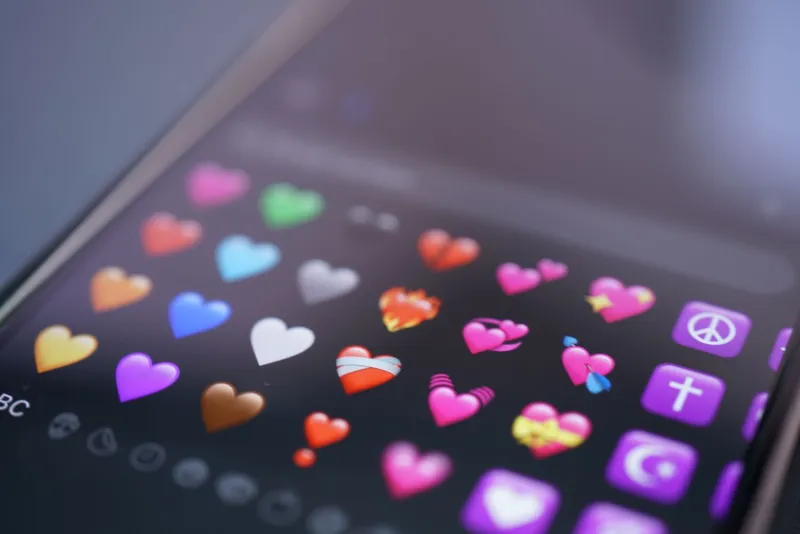
Apple has spent years refining its emoji keyboard — expanding it, diversifying it, making it more expressive with every iOS update. The company genuinely believes in emoji as a bridge between people. And in many ways, they work. But for non-native English speakers living and working in the US, emoji may be quietly doing more harm than good.
Let's talk about why.
The Shortcut That Goes Nowhere
When you use an emoji instead of an English phrase, you're skipping a step. And that step — the uncomfortable, effortful process of finding the right words — is exactly where language learning actually happens.
Think about the 🤔 emoji. In American digital culture, it usually signals skepticism, mild confusion, or "I'm not sure I believe that." But the English phrases it replaces are rich and varied:
- "That's a bit hard to swallow."
- "I'm not totally convinced."
- "Hmm, I'd want to know more before I agree with that."
- "That doesn't quite add up for me."
Each of those phrases carries a slightly different tone and weight. One is casual and almost playful. Another is more formal and measured. None of them is just 🤔. When you reach for the emoji every time, you never build the vocabulary to navigate those differences — and in a US workplace or social setting, those differences matter.
When the Same Emoji Means Something Completely Different
Here's where things get genuinely tricky. Emoji aren't actually universal. They just feel like they are.
Take 😊. In American usage, it typically reads as warm, friendly, a little soft — the digital equivalent of a polite smile. But in several East Asian cultural contexts, that same closed-eye smile can read as passive-aggressive or even sarcastic. A message that lands as sweet to an American colleague might land very differently to someone from a different background — or vice versa.
The 🙏 emoji is another classic example of cross-cultural confusion. In the US, most people use it to mean "thank you" or "please" — sometimes even as praying hands in a religious or hopeful context. In Japan, it's traditionally a gesture of apology or gratitude with much deeper cultural weight. The image is the same. The meaning is not.
For English learners, this creates a double problem: you may be misreading emoji from native speakers, and sending emoji that get misread in return. All while believing the communication was crystal clear.
The Emotions Emoji Can't Carry
Some feelings are genuinely hard to emoji-fy — and those tend to be the ones that come up most often in meaningful conversation.
Consider the difference between being disappointed and being hurt. Or between feeling nervous and feeling dread. Or the specific American-English concept of being "put on the spot" — that sudden, uncomfortable pressure when someone asks you something you weren't prepared for in a public moment. There's no emoji for that. But there's a very useful phrase.
Here are a few emotionally specific English expressions worth adding to your vocabulary right now:
Instead of 😔 (sad/down):
- "I'm feeling a little off today."
- "That really stung."
- "I'm kind of deflated about it."
Instead of 😤 (frustrated/annoyed):
- "That's getting on my nerves."
- "I'm at the end of my rope with this."
- "Honestly, I'm over it."
Instead of 🥺 (pleading/hoping):
- "I'd really appreciate it if you could..."
- "Is there any chance you might...?"
- "It would mean a lot to me if..."
These phrases don't just communicate an emotion — they communicate you. They show nuance, self-awareness, and language fluency that no small yellow face ever can.
What Apple's Emoji Keyboard Won't Teach You
iOS 17 gave us even more expressive emoji. There are options for nearly every skin tone, hair color, family configuration, and activity imaginable. Apple's commitment to representation in its emoji library is genuinely impressive.
But scroll through that keyboard for a moment. Notice what's missing. There's no emoji for ambivalence. Nothing captures cautious optimism. You can't emoji your way through setting a boundary or giving constructive feedback or politely disagreeing with your manager in a meeting.
Those are the moments that define professional and social life in the US — and they require real English, not a tap on a screen.
A Smarter Way to Use Emoji (Yes, You Can Still Use Them)
This isn't an argument for going emoji-free. That ship has sailed, and frankly, a world without 🎉 would be a sadder place. The goal is to use emoji alongside language, not instead of it.
Here's a useful rule of thumb: if you're using an emoji because you don't know what to say, that's your cue to learn what to say.
Next time you instinctively reach for 😅 (that nervous laugh/awkward energy emoji), pause and ask yourself: what would I actually say out loud in this moment? Maybe it's "Ha, that's a little awkward." Maybe it's "Oops — my bad!" Maybe it's "That was more than I bargained for."
Say it in the chat. Type the words. You'll feel a little exposed at first, like you're showing your cards. That exposure is the learning.
The Bigger Picture
Apple built emoji into the core of iPhone communication because it understood something true: humans want fast, expressive, low-friction ways to connect. That instinct is good. But language — especially English in an American context — is one of the most powerful tools you have for building real connection, real credibility, and real belonging.
Emoji can open a door. But vocabulary is what lets you walk through it.
So keep the 😊 in your toolkit. Just make sure you know what you'd say if the keyboard wasn't there.