Cache, Safari, Wi-Fi: The Tech Pronunciation Guide Nobody Gives You

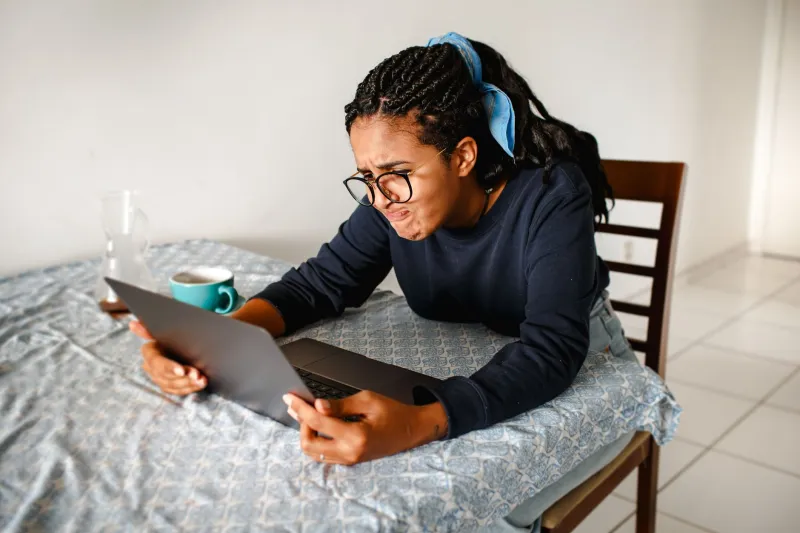
Photo by Photo by Dylan Ferreira on Unsplash on Unsplash
Here's an uncomfortable truth about American English: we don't agree on how to say half our own technology words. Ask three Americans about 'data' and you might get three different answers. So if you've been stressing about perfect pronunciation, relax — the goal isn't perfection. The goal is being understood on the first try.
That said, there are a handful of words where a small fix makes a big difference. Let's go through them.
1. Cache
Say it like: CASH. One syllable. Rhymes with 'flash.'
This is the classic trap because 'cache' looks like it should rhyme with 'catch' or 'attach.' It doesn't. If you say 'ca-SHAY,' you're pronouncing a different word entirely — cachet, which means prestige. Bonus: 'cache' and 'cash' sound identical, so 'clear the cache' sounds exactly like 'clear the cash.'
2. Data
Say it like: DAY-tuh (most common) or DA-tuh.
Americans split on this one, often by region — DAY-tuh dominates in most of the US, while DA-tuh shows up more in some British-influenced circles. Either is fine. The mistake to avoid is stressing the second syllable: it's never da-TAY-tuh.
3. Safari
Say it like: suh-FAR-ee.
Stress the middle. The most common learner error is 'SAH-fah-ree' with stress up front, which can make it sound like a different word entirely. Note the ending is 'ree,' not 'rye.'
4. Wi-Fi
Say it like: WHY-fye.
Both parts rhyme with 'eye.' Learners sometimes say 'wee-fee' (a very natural guess if your first language has different vowel rules). The 'Wi' rhymes with 'sky,' not 'ski.'
5. macOS
Say it like: mac-OH-ess.
The 'OS' is spoken as two letters, O-S, not as the word 'oss.' Same for iOS: 'eye-OH-ess.' A related one: the 'X' in 'OS X' was always pronounced 'ten,' a detail that confused even native speakers for years.
6. Suite
Say it like: SWEET.
As in 'a suite of apps.' It's pronounced exactly like the candy. Learners often say 'soot,' which is what's in your fireplace. 'Adobe Creative Suite' should sound like 'Adobe Creative Sweet.'
7. Chip
Wait — you know this one. But context matters: Americans say 'the chip is fast' and 'chip away at the problem' with the same sound, so if you've only seen 'chip' written down, good news, there's no trap here. Enjoy the free win.
8. Interface
Say it like: IN-ter-fayss.
Stress the first syllable, and the ending rhymes with 'face,' not 'fiss.' 'IN-ter-fiss' is a common slip for speakers whose first language ends borrowed words differently.
9. Debut
Say it like: day-BYOO.
Tech headlines love this word — 'the feature debuts this fall.' The 't' is silent-adjacent and the ending is 'byoo,' like 'beauty.' 'Deh-BUT' is the error to watch for.
10. Gesture
Say it like: JES-chur.
Soft 'g,' like 'giant.' On an iPhone you swipe with gestures, and the word should start with a J sound, never a hard G. Same rule for 'gigabyte' — it's 'JIG-uh-bite,' though you'll hear hard-G versions from Americans too, which brings us to...
11. GIF
Say it like: JIF (officially) or GIF with a hard G (in practice).
Yes, even Americans fight about this. The creator said 'JIF'; most of the country says hard-G 'GIF' anyway. Our advice: pick the hard G, because it's what most people around you will say — and know that either choice might get a playful correction. This is a word where being understood was never the problem. Picking a side is.
12. Router
Say it like: ROW-ter (US) or ROOT-er (UK).
In America, your Wi-Fi box is a ROW-ter, rhyming with 'louder.' The ROOT-er pronunciation is standard in Britain and Australia, so if you learned English from British media, this is an easy switch.
The Real Rule: Stress Beats Vowels
Notice a pattern? Most of these mistakes aren't about exotic sounds — they're about which syllable gets the stress. suh-FAR-ee, not SAH-fah-ree. IN-ter-fayss, not in-ter-FISS.
If you only fix one thing, fix the stress. Americans are extremely forgiving of unusual vowels but can get confused when the rhythm of a word is off. Get the rhythm right and even an imperfect vowel will sail through.
And when in doubt? Say it with confidence. A confidently pronounced 'ca-SHAY' gets nodded at. A hesitant 'cash' gets asked about. In American conversation, confidence is half the pronunciation.